




If skin in your family reacts to sunscreen, the label is where most of the answers are. This guide covers the five things to check before you buy, how to patch test, and what to look for when switching. If you would rather go straight to what we make, our sunscreen for sensitive skin is fragrance-free, TGA-registered and independently tested.
Why is sunscreen so hard when your skin reacts to everything?
Because the two most common failure points, irritation and unpleasant texture, both end the same way: the sunscreen stops being used. The half-used tube that caused a rash. The one that stung around the eyes. The thick formula your child refused to let near them again. Families with reactive skin often try several sunscreens before finding one that works.
Five things to check before you buy
1. Fragrance-free, not just unscented. Fragrance is one of the most common causes of contact irritation and appears in many sunscreens, including some marketed as gentle. Unscented products can still contain masking fragrance. If you can only check one thing on the label, check this. Our post on fragrance-free versus unscented explains the difference.
2. Essential oil-free. Natural does not always mean gentle. Many essential oils are known sensitisers for reactive skin.
3. A specific free-from list. "Free from nasties" means nothing concrete. What matters is a named list you can evaluate. Ours reads: free from oxybenzone, homosalate, parabens, phthalates, sulphates, petroleum, triclosan, BPA, essential oils and fragrance.
4. Independently tested SPF. The SPF number on the front should come from an accredited laboratory, not just the brand. Ours has been independently tested by Eurofins Dermatest to a mean SPF of 61.0 (ISO 24444 and AS/NZS 2604:2012), with a 95% confidence interval of 57.8 to 64.1. View the full SPF testing results.
5. TGA registration. In Australia, sunscreens are regulated as therapeutic goods, not cosmetics. Look for an AUST L number on the label. Ours is TGA-registered (ARTG AUST L 391791), and the listing is publicly searchable at tga.gov.au.
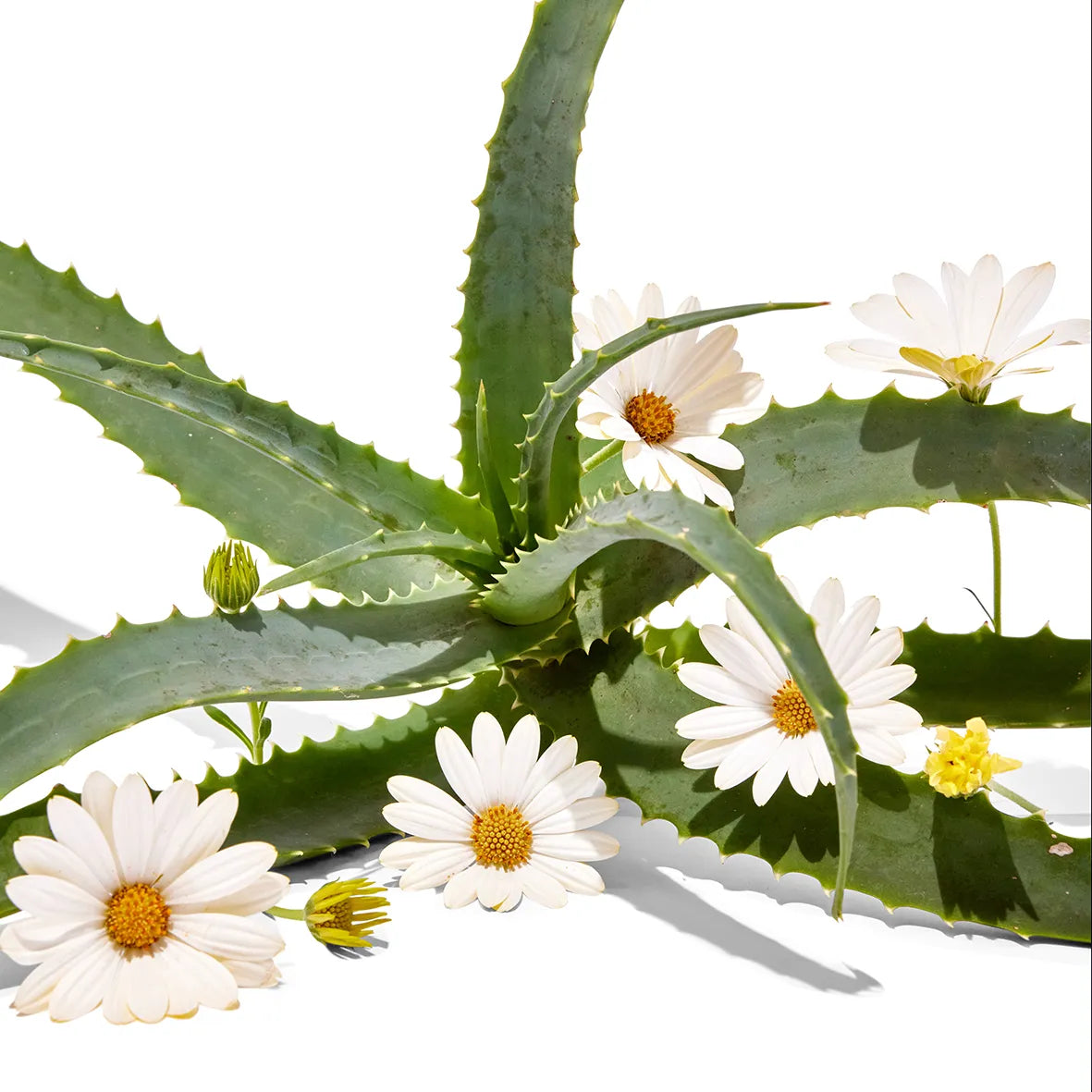
Then, comfort ingredients. Look for something calming alongside the SPF actives. Our sunscreen is infused with Aloe Vera and Vitamin E, chosen for how they feel on delicate skin during and after application.
What does "hypoallergenic" actually mean?
In Australia, "hypoallergenic" is not a regulated term. There is no legal standard a product must meet to carry it, no testing requirement, and no authority verifying the claim. The label answers none of the questions that matter: who tested it, on whom, and by what measure.
What to do instead: read the ingredient list. Look for the things most likely to cause reactions, starting with fragrance, then preservatives, dyes, and anything you or your child have reacted to before. Prefer products that name exactly what they exclude.
Switching sunscreens? Start with what irritated last time
Before you choose a new sunscreen, spend a moment with the old one's ingredient list. If you experienced redness, itching or a rash, there is likely a specific ingredient behind it. Common triggers include fragrance, essential oils and oxybenzone. Note anything that looks suspicious and check it is absent from whatever you try next. You do not need to become an expert in cosmetic chemistry; you need to find that one ingredient.
While you are comparing, "Australian made" is also worth checking. A product can carry the words if it was assembled or packaged here even when most ingredients were processed elsewhere. Our sunscreen is manufactured in Australia. A brand that is transparent about manufacturing will answer the question directly.
How do I patch test a new sunscreen?
Apply a small amount to the inner forearm, leave it undisturbed for 24 to 48 hours, and watch for redness, itching or any change in the skin. No reaction is a reasonable indicator the formulation suits that skin. If there is a reaction, check the ingredient list against anything you have flagged as a previous trigger, and speak with your GP before trying again.
For babies: Australian guidance recommends shade, protective clothing and broad-brim hats as the primary sun protection for babies under 6 months, with sunscreen introduced from around 6 months on small areas of exposed skin. For babies and young children with a history of skin reactions or any known skin conditions, speak with your GP or child and family health nurse before introducing a new sunscreen. Our guide on when babies can wear sunscreen covers this in detail.
This guide is general information only. If a reaction occurs after using any sunscreen, stop use and seek professional advice.
Why does texture matter so much for sensitive skin?
Because a sunscreen that feels thick, heavy or greasy is a sunscreen that does not get reapplied, and the missed reapplication is where the risk actually lives. Children are particularly honest about this. If a sunscreen stings, drags or leaves a white residue, they will resist it.
Our SPF50+ Sensitive Skin Sunscreen is lightweight, silky and fast-absorbing, with no white cast. Some sunscreens can feel thick or leave residue. Ours is designed to blend seamlessly into skin, so it gets used the way it is meant to be: generously, and again two hours later. Reapply every 2 hours and after swimming or towelling.
Shop SPF50+ Sensitive Skin Sunscreen
Prefer a different size? Browse our full range of sunscreen for sensitive skin, including the 30g travel size and family sets.
Can the whole family use one sunscreen?
Yes. Sensitive skin tends to run in families, and a bathroom shelf of half-used tubes is not a sustainable routine. Lullaby SPF50+ Sensitive Skin Sunscreen is gentle enough for babies, made for the whole family. One formula, designed for sensitive and reactive skin, Australian made, and water resistant up to 4 hours.
"It's rare to find a sunscreen that offers such high protection without irritating the skin. This product is a staple in my recommendations for families."
Dr. Jan Knight, GP and Cosmetic Physician
From customers who have made the switch:
"My little one reacted to so many different children's sunscreens and skincare brands until we found Lullaby. Now her skin is nurtured and nourished without any signs of redness at all. We are all so happy and the whole family use Lullaby now."
Camilla, verified customer
"There's no white cast, doesn't leave an oily residue and absorbs beautifully!"
Emily S., verified customer
FAQs
Is it suitable for sensitive and reactive skin?
Yes. It is designed for sensitive and reactive skin: fragrance-free, essential oil-free and oxybenzone-free. If you or your child has a diagnosed skin condition, check with your GP or health professional before introducing any new skincare product.
Does it leave a white cast?
No. It is formulated to blend seamlessly, with no white cast.
Is it fragrance-free?
Yes, genuinely fragrance-free, with no masking fragrances and no essential oils.
Has the SPF been independently tested?
Yes. Independently tested by Eurofins Dermatest to a mean SPF of 61.0 (ISO 24444 and AS/NZS 2604:2012). It is also TGA-registered (ARTG AUST L 391791).
Can adults use it?
Yes. One formula designed for the whole family, from babies through to adults.


